
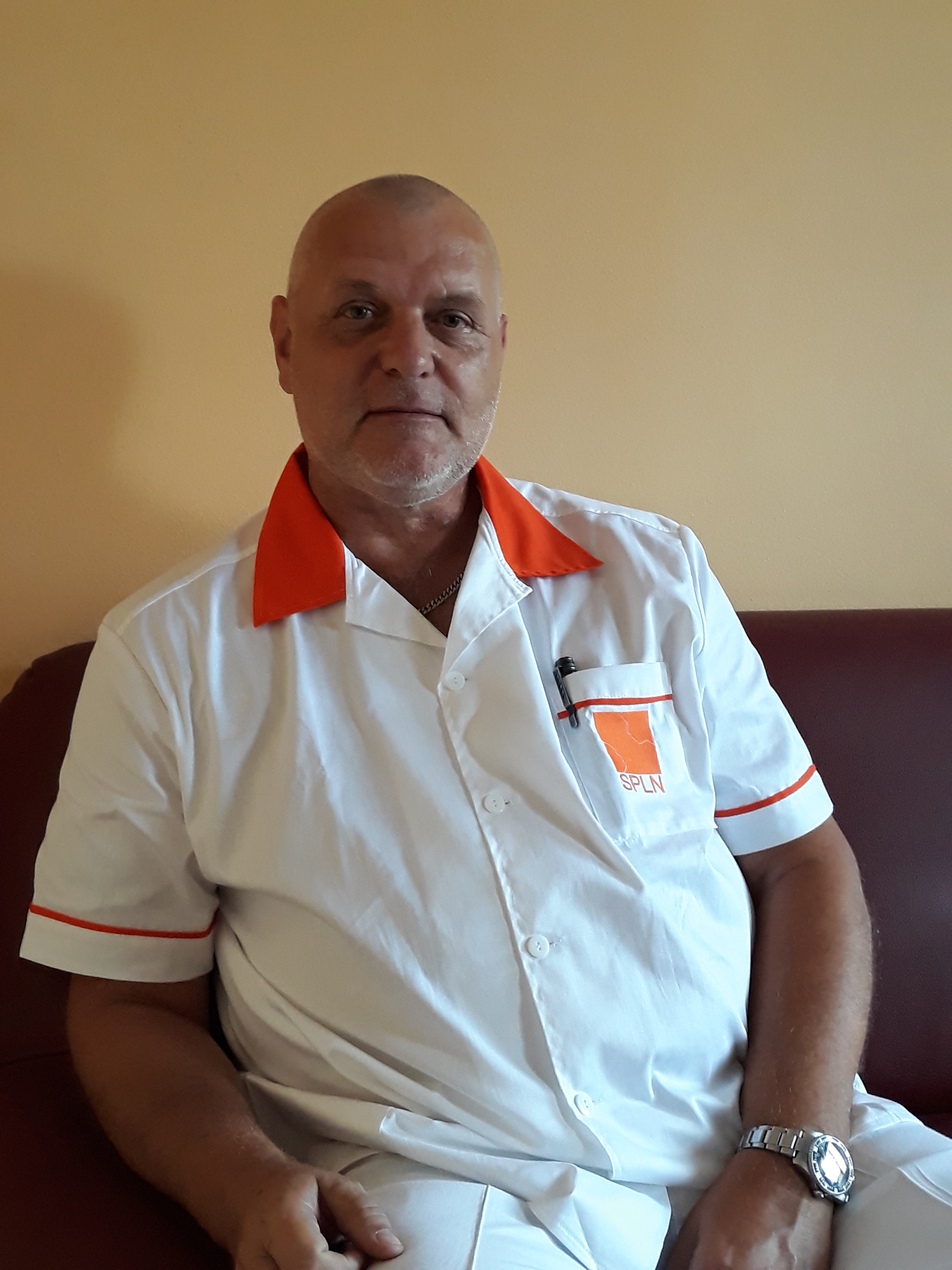
MUDr. Poláček – Interview
“There are already about a million children in the world born through assisted reproduction methods.
One of them is my daughter…” MUDr. Michal Poláček
We bring you an interview with our medical director, MUDr. Michal Poláček, MBA, who has been
working at SPLN for two years now. He has been dedicated to assisted reproduction continuously for
25 years.
Doctor, during your career, in addition to the Czech Republic, you have also worked in Poland and now in Slovakia. Have you noticed any differences between Czech and Slovak, or other IVF centers?
What is different in the Czech Republic?
Nothing (laughs). Reproductive medicine is experiencing a boom. Essentially, the same methods, the
same treatments, the same technology, and comparable technical equipment are used in both
countries. I see the only difference as the fact that reproductive medicine in the Czech Republic has
roughly a decade-longer tradition. Public awareness and patient mindset naturally stem from that.
Today, talking openly about infertility is no longer a taboo.
You have partially touched upon my next question. When we talk about the patient mindset, are
there any differences between Slovak and Czech women?
Patients in both countries have a lot in common; each one is literally fighting for her child. In both
countries (and this is a global issue), they often arrive late, postponing motherhood. The trend is an
increasing age among prospective mothers. Despite the options that modern medicine possesses,
there are limits in nature that we cannot overcome. Czech women strike me as more pragmatic in this
regard. When they discover they have a problem, they seek help at an IVF center without delay.
Slovak women deliberate for a long time; they are more reserved. However, their approach to the
treatment itself is just as open. That being said, one cannot generalize. During my practice, I had a patient who underwent treatment 11 times before she finally got pregnant. Yet, there are many who
are discouraged from further attempts by the initial disappointment of a failed attempt.
A key quality indicator for IVF centers is the success rate in terms of achieved pregnancies. Most
couples choose a center based on this. How do you view this?
Success rates in terms of achieving pregnancy are high in both countries. However, it is a relative
concept, which is why statistics should be evaluated from different angles. For the general public,
navigating through this maze of numbers is complicated. I am often asked by patients what the
chances of success are in their specific case. I try to explain it to them simply: it is like a figurative roll
of the dice. You might roll a six—there is a high probability—but you never know when. Any success
can be accompanied by failure. For us doctors, however, even a failure is a step forward toward
finding a solution. Failures must be diagnostically “actionable,” which is why I believe infertile couples
should not migrate between centers. They should return to where their previous treatment protocols
are known, so that other methods or treatments can be utilized.
What if the problem is more severe and you encounter the aforementioned limits, such as a low
ovarian reserve or higher patient age? I am referring to donor programs and world trends.
In the Czech Republic, the issue of germ cell donation is perceived more “practically” than in Slovakia.
This topic has resonated there for longer. That is likely why Slovakia has significantly fewer donors as
well as recipients. Slovak women are more conservative in this regard than Czech women. I feel as
though awareness of donation in Slovakia is still just taking shape; the topic remains taboo, despite
the fact that donating eggs, sperm, and embryos can be the only chance for some couples to have a
child.
Could the conservative approach of Slovak patients be caused by fears of potential health risks
associated with the donation or receipt of germ cells?
When it comes to sperm donation, there are no complications. It is a simple, non-invasive procedure,
and the collected sample is tested according to strict criteria. With women, it is naturally more
complex. The donor undergoes hormonal stimulation during which multiple follicles mature in the
ovaries. Egg retrieval is performed under general anesthesia. The treatment—in terms of active
ingredients and dosage—is very well-balanced, so I have no negative experiences with it.
Complications are truly rare. The health status of donors and their genetic potential are strictly
screened.
What is your opinion on “social freezing,” or the freezing and preservation of eggs and sperm in
healthy individuals?
I view it as a sensible step. In the United States and Western Europe, it is completely common to have
eggs and sperm frozen and stored “just in case,” not only for medical reasons. It might seem like a
fashion trend, but some couples or individuals simply aren’t planning parenthood at that specific
moment, yet they want to secure their future. In Slovakia and the Czech Republic, this trend has not
fully taken hold yet. Of course, we inform patients about this option. In cases of medical indication
(such as poor spermiogram results, or before chemotherapy and radiotherapy), it is usually the only
way to increase the chances of having children in the future. I believe it is only a matter of time
before it becomes common practice here as well.
How do insurance reimbursements work in the Czech Republic? Or put another way: is it more cost-
effective for Slovak women to undergo IVF treatment in the Czech Republic?
The situation regarding health insurance reimbursement in the Czech Republic is similar to that in
Slovakia. Insurance companies cover 3 IVF cycles up to the age of 39. Naturally, not all procedures are
covered; it is highly individual, and the treatment must be tailored to the patient’s needs. Co-
payments for medications are also approximately the same in both countries, so when comparing
total treatment costs, the result is roughly identical pricing. This also applies to self-paying patients.
Finally, what would be your advice to patients who are postponing addressing infertility or are afraid
to undergo treatment?
The essential step is simply to come to the IVF center. The initial consultation is free. Both partners
will undergo basic examinations, which are necessary. Very often, a certain barrier is broken right at
this stage. We must not forget that with advancing age, all complications become harder to resolve,
which is why I emphasize not postponing fertility treatment. Modern assisted reproduction can truly
help.