PRP therapy and ovarian rejuvenation
A healthy endometrium plays an important role in the IVF process and determines its success as well as the chances of implantation of the embryo after transfer into the uterus. Insufficient lining height reduces the chance of pregnancy and is also associated with a higher risk of miscarriage. In patients with premature ovarian failure, this innovative therapy can help in the regeneration of ovarian tissue.
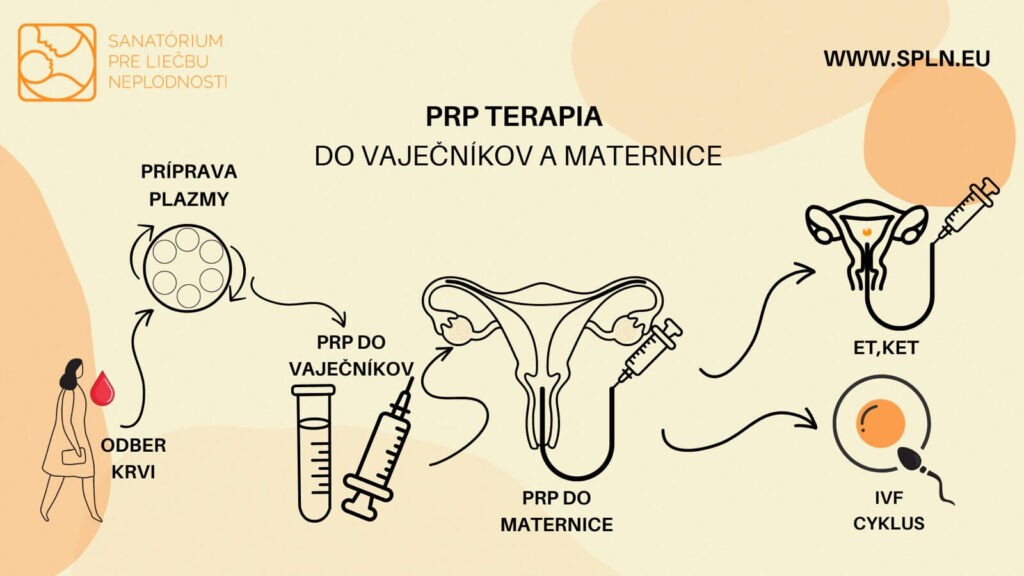
PRP is concentrated platelets-rich plasma of the body’s own blood, which activates the body’s natural reparative abilities. Platelets contain a full spectrum of growth factors that promote tissue growth and regeneration. It is applied in two ways:
- into the uterus, enriched with hyaluronic acid (which significantly increases its effect) via a catheter, without the need for anaesthesia
- under short anaesthesia in the ovaries, where it aids tissue regeneration and the restoration of follicle formation. We also talk about “ovarian rejuvenation”.
This method is intended for patients after repeated miscarriages, when the endometrium does not respond adequately to hormone therapy, when the mucosa is low, before insemination, embryo transfer and cryoembryo transfer. PRP is further recommended in patients with reduced ovarian reserve and low AMH levels, as well as in premature ovarian failure or in perimenopausal women. At the same time, as a preventive measure, it also helps with gynaecological problems such as frequent inflammation associated with discharge, vaginal dryness, irregular bleeding, menopause, etc. The more intense effect of the therapy was seen with repeated administrations. It has been found that after PRP application, hormones administered during ovarian stimulation or in preparation for embryo transfer are better absorbed.
Our plasma preparation methodology does not require culturing or freezing, which simplifies the patient’s access to therapy. The plasma is injected about 15 minutes after the patient’s own blood is drawn; there is no need for a longer waiting period or repeat visits for a single administration.
The PRP sample is prepared from the patient’s own blood; it is a patented, closed system, so the risk of infection, cross-contamination or immunogenic reaction is negligible.
The procedure of obtaining the plasma as well as the injection into the uterine cavity is a simple and painless procedure, which does not require anaesthesia. In the case of ovarian injection, we work under short-term anaesthesia under the supervision of a specialist, after checking the pre-operative examinations. The procedure is similar to oocyte retrieval after stimulation.